
If you have ever scrolled through a streaming catalogue of Chinese dramas and felt lost between flying swords, celestial realms, silk robes and centuries-long romances, you are not alone. Two words come up again and again in C-drama circles: xianxia and wuxia. They look similar, they often share the same costumes and the same sweeping soundtracks, and they are constantly mixed up by newcomers. But they are genuinely different genres, with different rules, different emotional payoffs and different learning curves. Here is a clear, spoiler-light guide to telling them apart and choosing the right entry point for your first watch.
The short answer
Wuxia is about mortals. Extraordinary mortals, capable of astonishing martial feats, but still human beings who age, bleed and die. The world is the historical (or semi-historical) world of imperial China: inns, sects, rival schools, and the jianghu, the informal world of martial artists that exists alongside official society.
Xianxia is about becoming more than mortal. It borrows heavily from Daoist mythology and folk religion: cultivation, immortality, celestial courts, demon realms, spirit beasts, reincarnation across lifetimes. Characters do not just train to fight better; they train to transcend.
A useful shorthand: wuxia is a martial arts story built on a code of honour, while xianxia is a mythological fantasy epic that happens to include martial arts.
What defines wuxia
Human stakes, human limits
In wuxia, a hero’s power comes from discipline: years of training, a rare manual, a demanding master, a technique refined through injury and failure. Skills can be spectacular, from light-footed leaps across rooftops to internal energy channelled into a single palm strike, but they remain grounded in a body that can be exhausted or poisoned.
The jianghu and its code
The heart of wuxia is not magic; it is ethics. Loyalty, revenge, righteousness, the debt owed to a teacher, the promise made to a dying friend. Conflicts are usually political or personal: a sect leadership dispute, a stolen manual, a massacre that demands justice, a hero caught between duty to the state and loyalty to his sworn brothers. When wuxia is at its best, the fight scenes are the punctuation and the moral dilemmas are the sentence.
Grounded aesthetics
Expect dusty roads, wine houses, courtyards, ink-painting compositions, muted palettes and choreography that emphasises weight and impact. Even when the wirework is generous, the visual language stays closer to history than to myth.
What defines xianxia
Cultivation as the engine of the plot
Xianxia runs on cultivation: the practice of refining one’s spiritual energy through meditation, trials and self-mastery in order to ascend toward immortality. Progress is measured in stages and tribulations, and the price of power is usually emotional, whether that is a bond severed, a memory erased, or a lifetime sacrificed.
Multiple realms, multiple lifetimes
Where wuxia stays on the ground, xianxia stacks worlds on top of each other: a heavenly realm of gods and celestial officials, a mortal realm, a demon or ghost realm, sometimes a sea realm or a beast realm. Characters die and are reborn. Lovers meet, lose each other, and meet again centuries later with no memory of the first time. This is why xianxia romances hit so hard: the story has literal lifetimes in which to make you ache.
Maximalist aesthetics
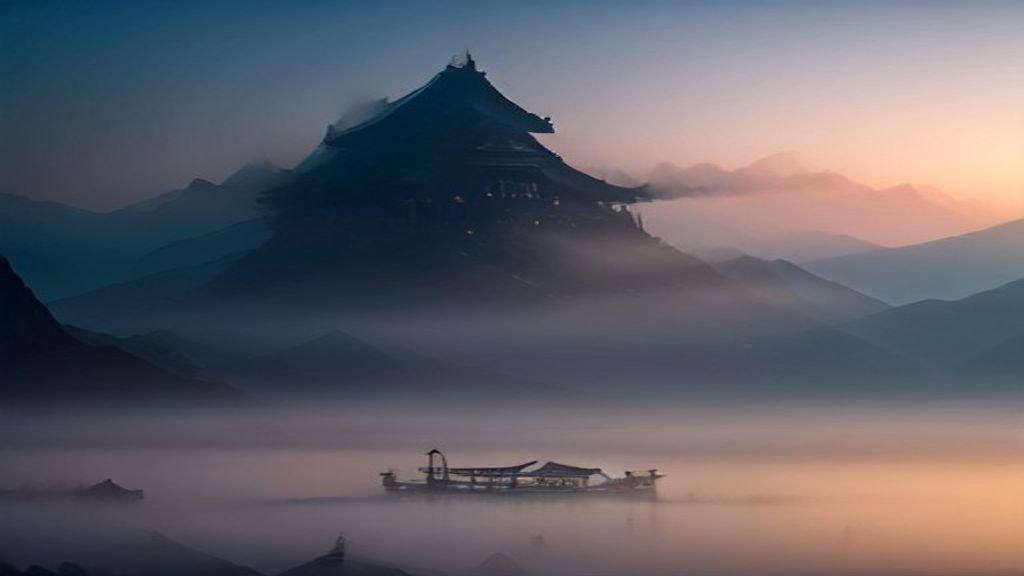
Xianxia is unapologetically lush. Floating islands, glowing spirit swords, waterfalls of light, elaborate white and pastel robes, hair ornaments that could fund a small kingdom. If a scene looks like a moving watercolour painting, you are almost certainly watching xianxia.
The overlap, and why people get confused
The two genres share a family resemblance, and modern productions blur the line on purpose. A few reasons the confusion persists:
- Shared costume language. Both fall under guzhuang, or costume drama, so the visual first impression is nearly identical.
- Sects and masters appear in both. Wuxia has martial sects; xianxia has cultivation sects. The training scenes look alike.
- Hybrid shows exist. Many popular series sit between the two, keeping the wuxia spine of brotherhood and honour while adding supernatural creatures and spiritual energy systems. Fans sometimes file this middle ground under xuanhuan, a broader fantasy label.
- Marketing is loose. Streaming platforms often tag everything as “fantasy” or “historical,” which flattens the distinction entirely.
Which one should you start with?
Start with wuxia if…
- You like grounded stakes, political intrigue and morally complicated heroes.
- You enjoy martial arts choreography and want to actually follow the fights.
- You prefer stories that resolve within one lifetime and one world.
- You are coming from historical K-dramas or Western period dramas and want a soft landing.
Start with xianxia if…
- You want epic, tragic romance with destiny, sacrifice and reincarnation.
- You love worldbuilding, mythology and visual spectacle.
- You are comfortable with long episode counts and a slower first act.
- You came for a specific fandom, since xianxia has some of the most active online communities in the C-drama world.
Survival tips for your first C-drama epic
- Expect a long runway. Many of these series run 40 to 60 episodes, and the first four or five are usually worldbuilding. Give it until the first major arc closes before deciding.
- Keep a name list. A character may have a birth name, a courtesy name, a sect title and a divine title. Jotting down three or four key names for the first few episodes saves a lot of rewinding.
- Read the subtitles carefully early on. Terms like cultivation, tribulation, spiritual energy and immortal are used precisely, not decoratively.
- Do not skip the opening arcs. Flashback-heavy structures are common, and a scene that felt like filler is often the emotional key to the finale.
- Check which cut you are watching. Some series circulate in both a full broadcast version and a shorter international edit, and the pacing experience can differ significantly.
Why these genres travel so well
Xianxia and wuxia have become two of China’s most successful cultural exports for a simple reason: they offer something Western fantasy rarely does. Instead of chosen-one narratives driven by external prophecy, they centre self-cultivation, the idea that power is the product of discipline, restraint and moral choice. And instead of treating romance as a reward at the end of the quest, they treat love as a force that survives death, memory loss and cosmic law. That combination of philosophy and melodrama is enormously addictive, and it explains why newcomers who finish one fifty-episode epic tend to immediately start another.
Final thoughts
You do not need to memorise a glossary to enjoy Chinese costume dramas. But knowing whether you are about to watch a story about mortals fighting for honour or immortals fighting fate makes it far easier to pick the right series for your mood, and far less likely that you drop a great show three episodes in for the wrong reasons.
Both genres reward patience. Wuxia gives you tight codes of loyalty and unforgettable duels; xianxia gives you a romance that spans lifetimes and a world that keeps expanding. Whichever you choose, start with one, finish it properly, and let your watchlist grow from there.
Ready to explore more? Keep coming back to Drama Online for guides, reviews and recommendations across K-dramas, C-dramas and J-dramas. We publish something new for you every day.